

Download The App
The CGE Golf App helps ensure you never miss a tee-off time or hotel check-in, giving you a seamless and smooth golf experience so you stay focused on your game!


Thailand is one of Asia's premier golf destinations — world-class courses, immaculate fairways, dedicated caddies, and green fees that are a fraction of what you'd pay back home. Whether you're heading to Phuket's ocean-view layouts, Hua Hin's royal heritage courses, or Pattaya's dense concentration of championship tracks, a well-planned packing list can make the difference between a smooth, focused trip and a frustrating scramble for forgotten essentials.
This guide covers everything you need for a Thailand golf tour — from equipment and clothing to travel documents and health prep — so you can step off the plane ready to play.
▪️ Golf clubs or rental confirmation
▪️ Golf travel bag/ hard case
▪️ Moisture-wicking golf shirts (collar required at most clubs)
▪️ Golf shoes + casual sandals
▪️ SPF 50+ sunscreen (plenty of it)
▪️ Insect repellent
▪️ Passport + visa documentation
▪️ Travel insurance covering golf equipment
▪️ Power adapter (Type A/B/C)
▪️ THB cash for green fees and caddie tips
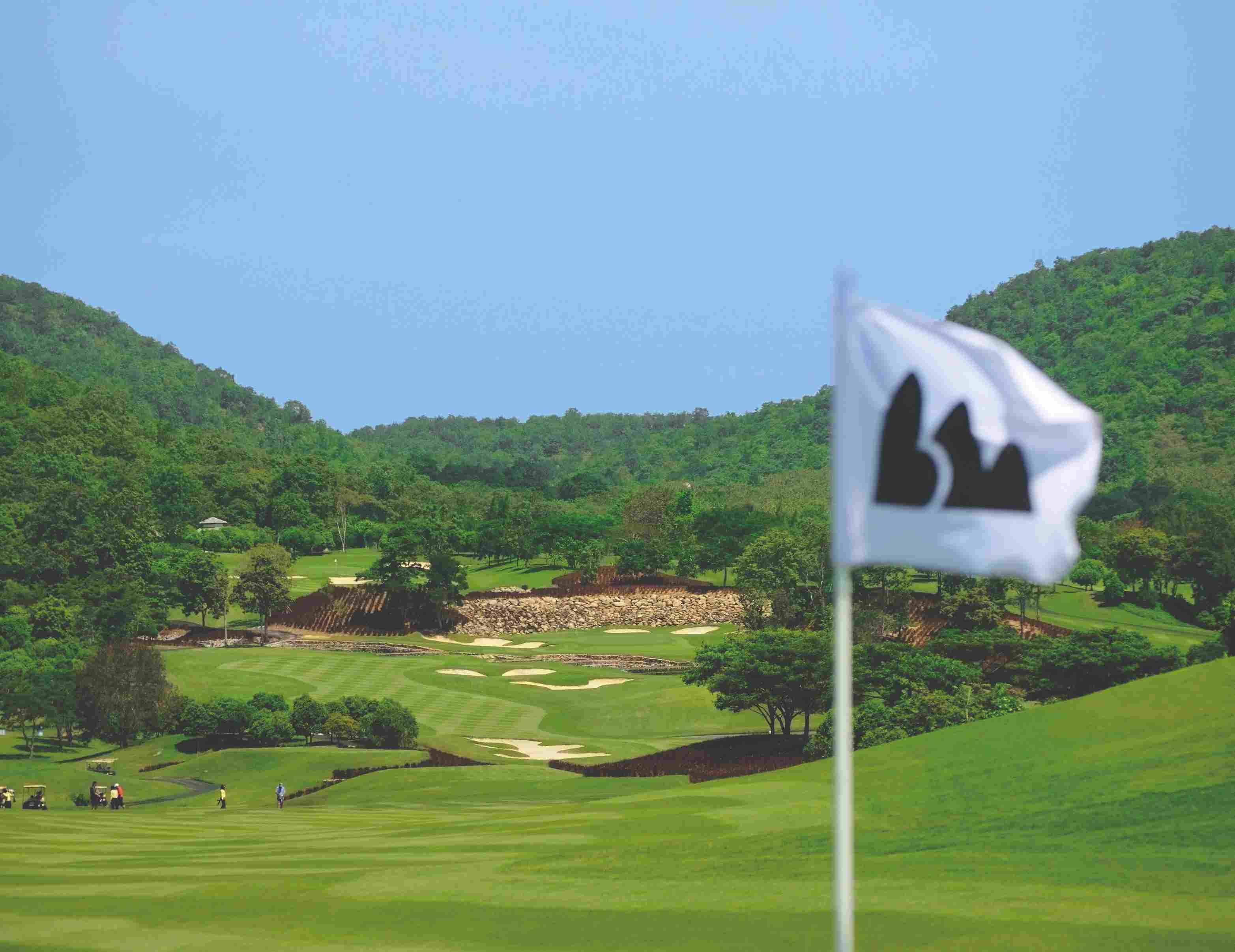 Black Mountain Golf Club - @CGE Golf
The first decision every golfer faces before a Thailand trip is whether to haul their own clubs or rent at the course. The honest answer: both options are genuinely viable.
Bring Your Own
▪️ Cost: Airline fee ($50–$100 each way)
▪️ Comfort: Play with familiar clubs
▪️ Convenience: Extra luggage to manage
▪️ Quality: Your preference
Rent in Thailand
▪️ Cost: ~฿500–฿1,000/round
▪️ Comfort: Clubs vary by course
▪️ Convenience: Travel light
▪️ Quality: Decent but inconsistent
If you're a serious golfer who depends on your own set, bring them. If you're on a multi-destination trip and don't want the hassle of checking a golf bag, renting is perfectly acceptable — especially at top courses in Phuket and Hua Hin where rental sets are well-maintained.
👉 CGE Golf Tip: If you book a golf tour package through CGE Golf, we can arrange pre-reserved rental sets at your courses so you're guaranteed a consistent, quality set without lugging anything on the plane.
 Laguna Phuket - © CGE Golf
Your clubs are your most valuable assets on this trip. Getting them to Thailand safely—and keeping your bag stocked—requires strategic packing.
A damaged driver head can ruin your entire holiday before it even begins. Follow this quick routine when packing your travel bag:
▪️ Remove the heads of your adjustable woods and drivers. Put them in their headcovers and pack them securely inside your checked luggage or carry-on.
▪️ Use a Support Arm: Invest in a rigid travel support arm (like a Stiff Arm) that extends longer than your longest club to absorb any vertical impact if the bag is dropped by baggage handlers.
▪️ Weave a towel through your irons to prevent them from clattering and scratching each other during transit.
While you can buy golf balls at any clubhouse in Thailand, pro shop prices are heavily marked up due to import taxes.
▪️ Pack 1 to 2 dozen of your favorite golf balls in your checked luggage. Thai courses are famously beautiful but feature numerous water hazards and dense jungle borders. If you have a tendency to slice, pack a few extra.
▪️ Bring a generous handful of your preferred tees, a divot tool, and a ball marker.
In the intense Thai humidity, your hands will sweat, causing leather gloves to become slick and saturated quickly. Pack at least 3 to 4 golf gloves. Hang the wet ones on the canopy of your golf cart during the round to dry while you rotate to a fresh, dry one.
If you do bring your clubs, investing in a quality travel bag is non-negotiable. Options fall into two camps:
▪️ Hard cases (brands like SKB, Club Glider, or Samsonite Golf) offer the best protection for long-haul flights through Bangkok's Suvarnabhumi or Phuket International. They're heavier but give you peace of mind on baggage carousels.
▪️ Soft travel bags (Sun Mountain, Bag Boy) are lighter and fold down for storage, but offer less impact protection. Use them only with thick padding and head covers on all clubs.
▪️ Pack your bag smart: place head covers on every club, use iron covers or wrap irons in towels, and fill hollow spaces (like your bag hood) with rolled socks or soft clothing to prevent movement.
Don’t forget these small items that are surprisingly hard to find or overpriced at Thai pro shops:
▪️ Golf gloves (pack 2–3 — humidity accelerates wear)
▪️ Golf tees (a full box)
▪️ Extra golf balls (a sleeve or two — balls are available in Thailand but branded options are limited)
▪️ Divot repair tool & ball marker
▪️ Rangefinder or GPS watch (see Section 5)
▪️ Golf towel (quick-dry fabric recommended)
▪️ Spare scorecard pencils
 Black Mountain Golf Club - @CGE Golf
Thailand's tropical climate averages 30–35°C on the course. Choosing the right clothing is about far more than fashion — it directly affects your comfort and performance across 18 holes.
Most mid-range to premium golf courses in Thailand enforce a standard dress code. General rules to follow:
▪️ Shirts: Collared polo shirts required at virtually all courses. Round-neck T-shirts are not accepted.
▪️ Trousers/shorts: Tailored golf shorts or trousers. Denim, cargo shorts, and athletic shorts are usually prohibited.
▪️ No sleeveless tops — even in the heat, most clubs require sleeved shirts.
▪️ Some prestigious clubs (e.g., Black Mountain Golf Club in Hua Hin, Banyan Golf Club) have stricter standards — check the course's website before you travel.
In Thailand's heat, your clothing choice matters as much as SPF. Look for:
▪️ Moisture-wicking polyester blends that pull sweat away from the skin (Nike Dri-FIT, Adidas Climacool, Under Armour HeatGear)
▪️ UPF 30–50 rated fabrics for built-in sun protection
▪️ Lightweight stretch fabrics that allow full swing movement without restriction
▪️ Light colours — white, light grey, pale blue — to reflect heat rather than absorb it
👉 Avoid dark colours and 100% cotton. Cotton feels comfortable off the course but becomes heavy and uncomfortable once you start sweating.
A good rule of thumb: one outfit per round, plus two extras. For a 5-round tour, that means 7 full golf outfits. Thailand's heat means you'll be soaked through after 18 holes — wearing the same shirt two days in a row is uncomfortable and impractical. Most hotels and resorts offer next-day laundry service for a very reasonable price, which can reduce how much you need to pack.
Don't forget you'll be spending plenty of time outside the golf course — at restaurants, temples, night markets, and beach bars. Pack a few casual outfits: lightweight linen shirts, shorts, sandals, and at least one smart-casual outfit for resort dining.
 Laguna Golf Phuket - @CGE Golf
For Thailand's courses, spikeless golf shoes are generally the better choice. Here's why:
▪️ Many Thai clubhouses require you to remove spiked shoes before entering (spikeless shoes can be worn inside)
▪️ Tropical fairways tend to be well-maintained and firm — you don't need aggressive traction
▪️ Spikeless shoes double as casual walking shoes on non-golf days
👉 If you prefer traditional spiked shoes for performance reasons, bring a pair of slip-ons to change into at the clubhouse. Whatever you choose, pick shoes with mesh or breathable uppers — your feet will thank you after hour four in 32°C heat.
Pack your golf shoes inside your regular luggage (not the golf travel bag) to save space — stuff socks inside the shoes to maintain their shape.
A pair of comfortable leather sandals or slip-on shoes covers you for restaurants, night markets, and hotel lobbies. Thailand is a walking culture in its urban areas — bring footwear that works for uneven pavements and evening strolls.
 Laguna Golf Phuket course - @CGE Golf
This is the section most golfers underpack for — and the one that most affects how you feel on Day 3 of a 5-round tour.
You will be standing in direct tropical sun for 4–5 hours per round. Use SPF 50+ broad-spectrum sunscreen and reapply every 90 minutes. Standard recommendations:
▪️ Apply 20 minutes before going outside
▪️ Don't forget the back of your neck, ears, and the tops of your hands
▪️ Use a sweat-resistant formula — regular sunscreen washes off quickly in Thailand's humidity
▪️ Pack more than you think you'll need. Sunscreen in Thailand is widely available but international brands at pharmacies (Watsons, Boots) can be pricey. Bring a large tube from home.
A wide-brim golf hat is more effective than a visor — it protects your ears and the back of your neck. UV-protective arm sleeves are popular among local Thai golfers and work very well. Polarised sunglasses are also worth packing for both course play and sightseeing.
Early morning and late afternoon tee times coincide with peak mosquito activity, particularly at courses near jungle or water features (which describes most scenic Thai courses). Pack a DEET-based repellent (30%+) or a picaridin-based alternative. Apply to exposed skin before you leave for the course.
Dehydration is the most common reason golfers feel fatigued on Day 2 of a Thai tour. Caddies will carry water, and most courses have drink stations — but bring electrolyte sachets (Nuun tablets, Liquid IV, or similar) to replace minerals lost through sweat. Coconut water, widely available at Thai courses, is also an excellent natural option.
Items to pack yourself (available in Thailand, but it's easier not to hunt them down):
▪️ Paracetamol / ibuprofen
▪️ Antihistamine tablets
▪️ Blister plasters (new golf shoes + heat = blisters)
▪️ Antidiarrheal tablets (traveller's stomach is real)
▪️ Any prescription medications in original packaging
▪️ Rehydration sachets
👉 Thai pharmacies (Boots, Watsons, local chains) are excellent and affordable, but having basics on hand means you're not missing your morning tee time hunting for a pharmacy.
 Blue Canyon Country Club in Phuket - @CGE Golf
A laser rangefinder (Bushnell, Precision Pro, Nikon Coolshot) is allowed at most Thai courses and gives you accurate yardages on unfamiliar layouts. Alternatively, a GPS golf watch (Garmin Approach, Bushnell Ion Elite) provides pre-loaded course maps for hundreds of Thai courses.
If you're undecided, a GPS watch is the more practical choice for travel — it doesn't require you to point it at a flag and works hands-free while you walk.
▪️ GolfNow — for last-minute tee time booking at Thai courses
▪️ 18Birdies — GPS, scoring, and shot tracking; covers most Thai courses
▪️ Golfscape — strong coverage of Southeast Asian courses with satellite views
▪️ Google Maps — genuinely useful for navigating to courses from your hotel, especially in Pattaya and Chiang Mai where course addresses can be tricky
Thailand uses Type A, B, and C outlets at 220V/50Hz. Most modern electronics (phones, cameras, laptops) handle dual voltage automatically — but check your device's power brick for "100–240V" before you travel. Bring a universal travel adapter rather than a country-specific one. A multi-port USB charging hub saves you from fighting over sockets at the hotel.
Thai golf courses are genuinely beautiful — mountain backdrops in Chiang Mai, ocean views in Phuket, manicured resort layouts in Hua Hin. A compact action camera (GoPro, DJI Osmo Action) or even your smartphone is worth bringing for course photography. A waterproof phone pouch is useful during the wet season (May–October) when afternoon showers are common.
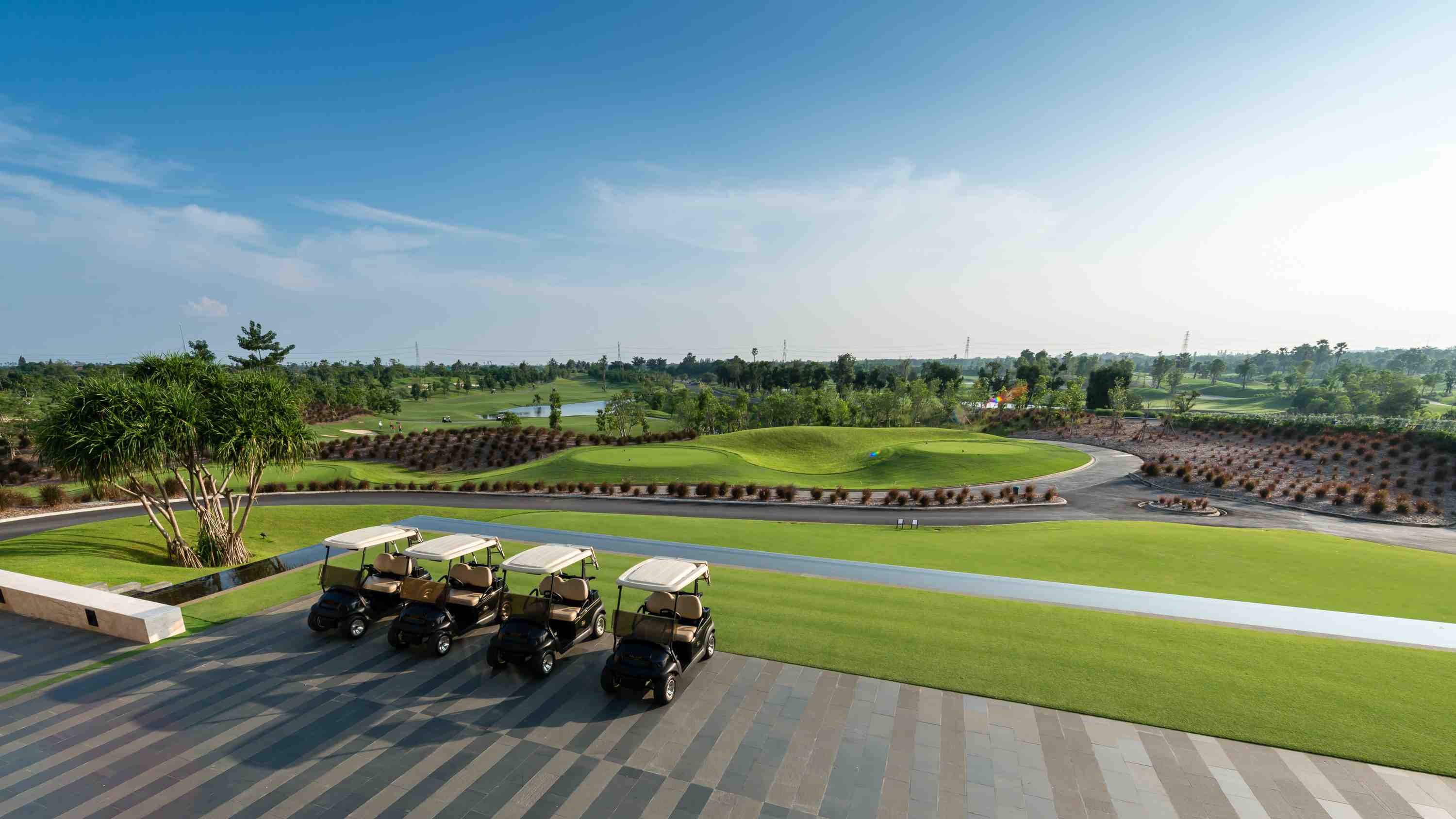 Nikanti Golf Club in Nakhon Pathom - @CGE Golf
As of 2026, many nationalities — including UK, US, EU, Australian, and most Southeast Asian passport holders — receive a visa exemption for stays up to 30 or 60 days, depending on their nationality. Thailand has also expanded its e-Visa system for other nationalities.
Check the current status at the Thai Embassy website for your country or via the official Thai immigration portal before you book. Requirements can change, and golf tours often run 7–14 days, well within exemption limits for most travellers.
Standard travel insurance often doesn't cover golf equipment theft or damage. Look for a policy that explicitly includes:
▪️ Golf equipment (clubs, bag, shoes) — typically up to £1,500–£3,000
▪️ Golf round cancellation due to illness or injury
▪️ Hole-in-one celebration cover (yes, this is a real thing — and in Thailand, buying the clubhouse a round is expected tradition)
👉 Specialist golf travel insurers (Golfplan, Golf Guard, Campbell Irvine) offer these as standard. General travel insurers often add golf cover as a paid add-on.
Airline policies for golf bags vary significantly:
▪️ Thai Airways, Bangkok Airways: Golf bags count as standard checked baggage up to standard weight limits
▪️ Emirates, Qatar Airways, Singapore Airlines: Golf equipment usually exempt from bag count but subject to weight limits (typically 23kg)
▪️ Budget carriers (AirAsia, Scoot): Usually charge for golf bags as oversized/additional luggage — budget $30–$60 each way
👉 Confirm directly with your airline before travel. Take out travel insurance that covers airline-damaged equipment, and photograph your bag and clubs before check-in.
Most courses in Thailand accept credit cards (Visa/Mastercard) for green fees, but cash in Thai Baht (฿) is essential for caddie tips, snacks, and smaller pro shops. Tip your caddie ฿200–฿400 per round as a general benchmark — they work hard, read greens for you, and make the experience significantly better.
ATMs are available at most airports and in all major golf destinations. Avoid airport currency exchange counters — their rates are poor. Use your bank card at a local ATM or exchange at a licensed money changer in town.
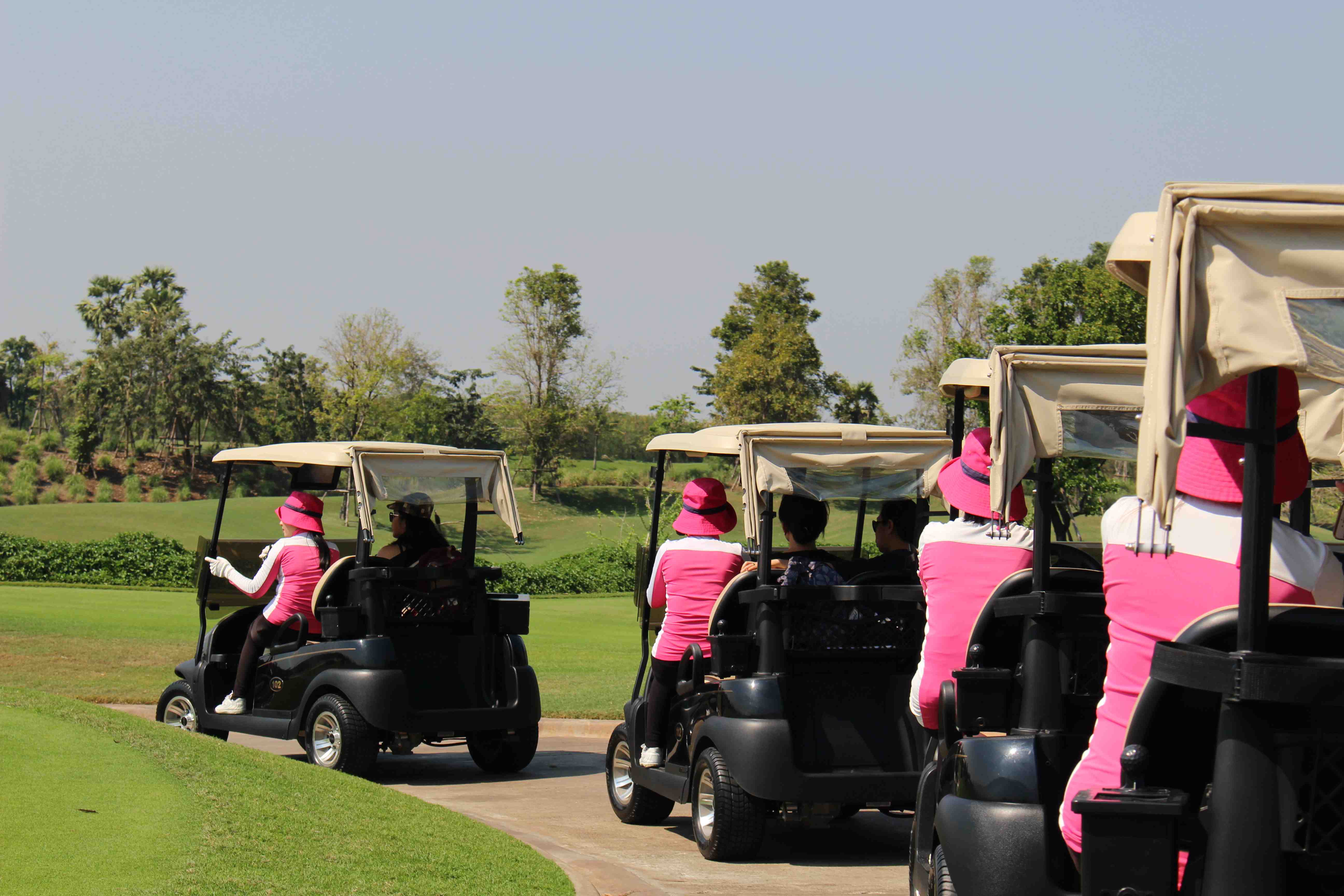 Caddies in Thailand - @CGE Golf
Thailand's golf destinations each have slightly different characteristics — and a few packing considerations that differ by location.
Phuket's courses (Red Mountain, Mission Hills, Loch Palm, Blue Canyon) are set amid jungle hills and near the ocean. The island's humidity is higher than average — pack an extra set of golf clothes and prioritise quick-dry fabrics. A light packable rain jacket is useful during the wet season. After golf, Phuket's beach resort culture means you'll want smart-casual outfits for beachfront dining.
[→ Explore CGE Golf's Phuket Golf Tour Packages]
Hua Hin is Thailand's most prestigious golf destination — home to Black Mountain, Banyan, and Majestic Creek. Dress codes here are strictly enforced, so pack your best golf attire. The town has a relaxed royal-resort atmosphere; smart-casual evening wear works well for restaurants along the waterfront.
[→ Explore CGE Golf's Hua Hin Golf Tour Packages]
Pattaya has the highest density of golf courses in Thailand — Laem Chabang, Burapha, St. Andrews, and Plutaluang are all within easy reach. It's an urban base, so getting between courses involves road travel. Pack light and use your hotel's laundry service — you don't want heavy luggage in and out of taxis.
[→ Explore CGE Golf's Pattaya Golf Tour Packages]
Chiang Mai sits at higher elevation in northern Thailand, and daytime temperatures can be 5–8°C cooler than the south, particularly from November to February. Pack a light mid-layer (a lightweight fleece or golf sweater) if travelling in the cool season. Chiang Mai's temple culture also means packing a pair of long trousers and covered shoes for sightseeing days.
[→ Explore CGE Golf's Chiang Mai Golf Tour Packages]
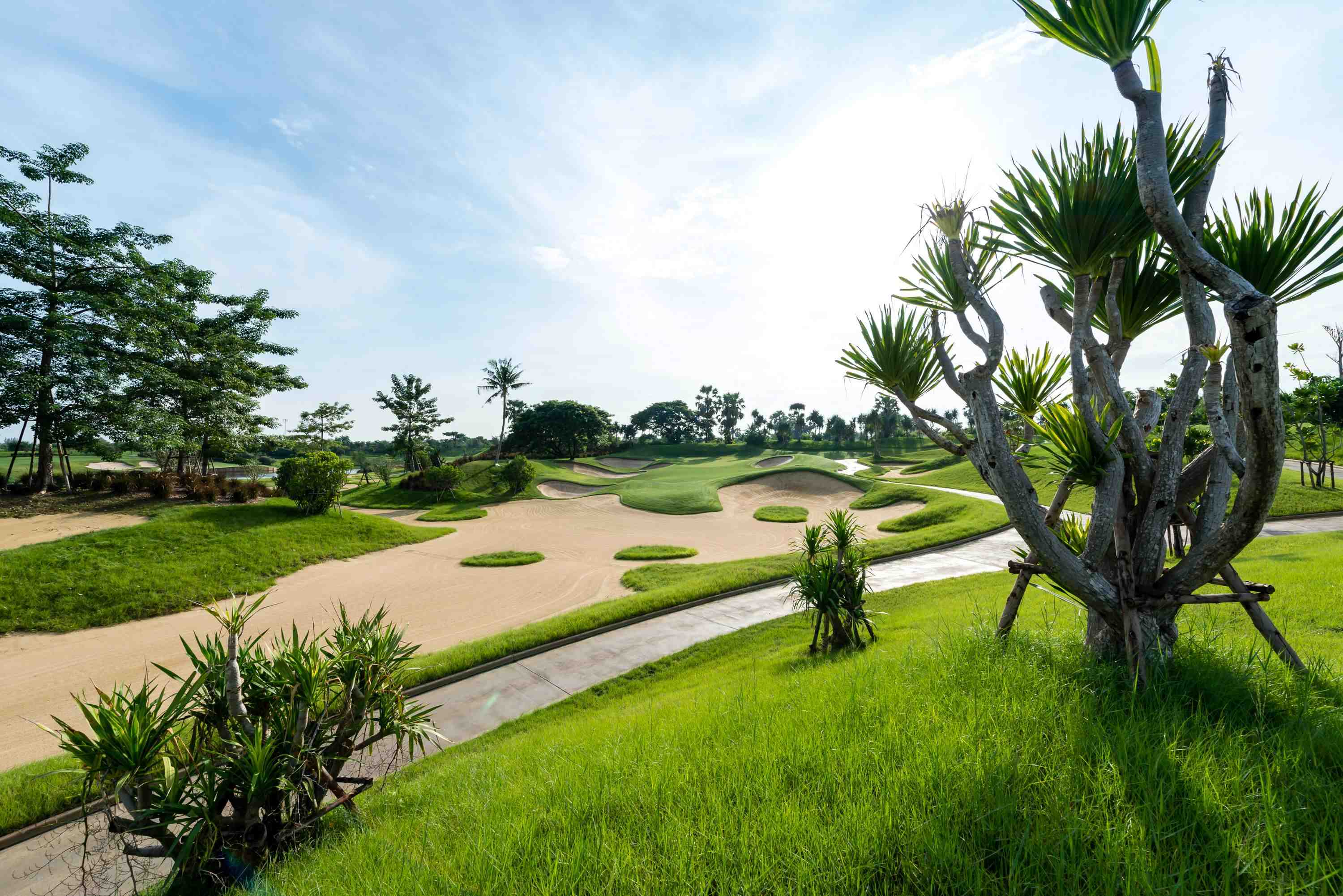 Nikanti Golf Club - @CGE Golf
Thailand has everything a golfer could ask for — exceptional courses, attentive caddies, incredible value, and scenery that puts most other golf destinations to shame. Pack smart with this checklist and you'll spend your trip focusing on your game, not worrying about forgotten essentials.
If you'd rather leave the logistics entirely to the experts, CGE Golf takes care of everything — course bookings, transfers, accommodation, and more — so you arrive ready to play.
[→ Explore CGE Golf's Thailand Golf Tour Packages]
The CGE Golf App helps ensure you never miss a tee-off time or hotel check-in, giving you a seamless and smooth golf experience so you stay focused on your game!